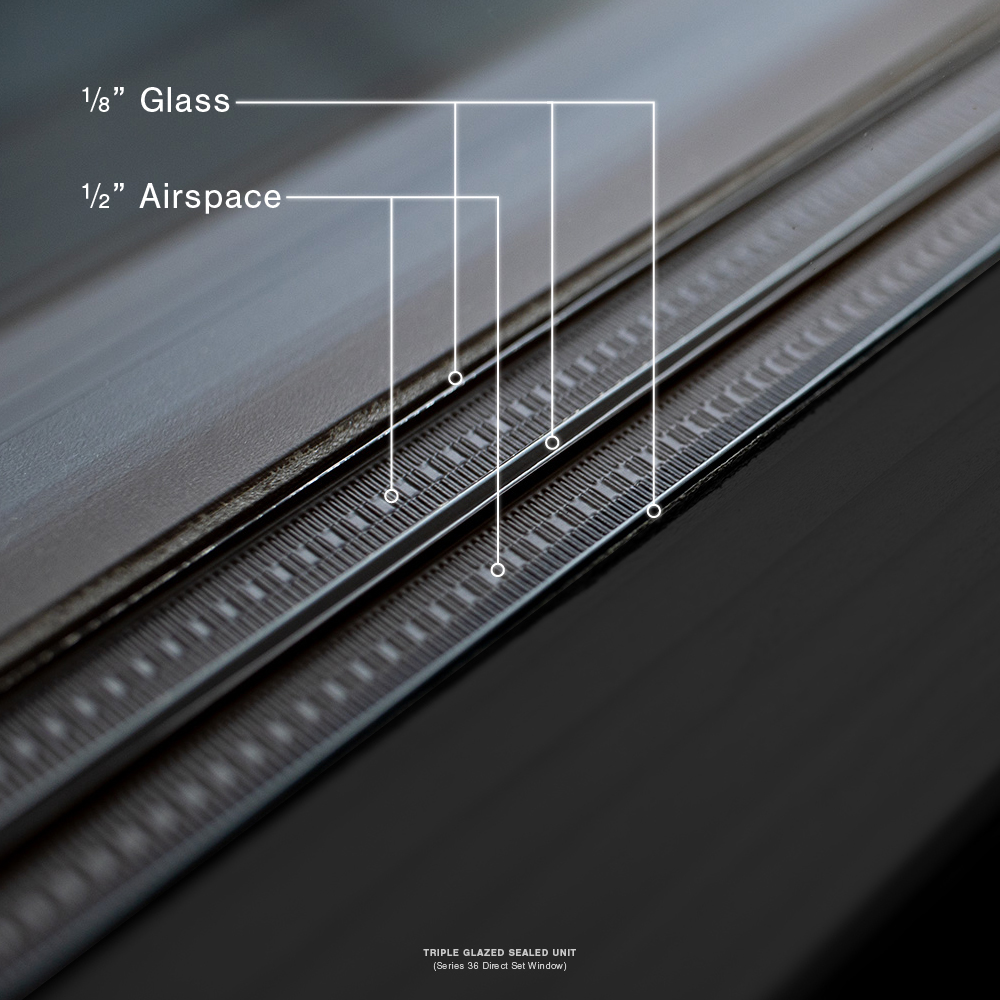
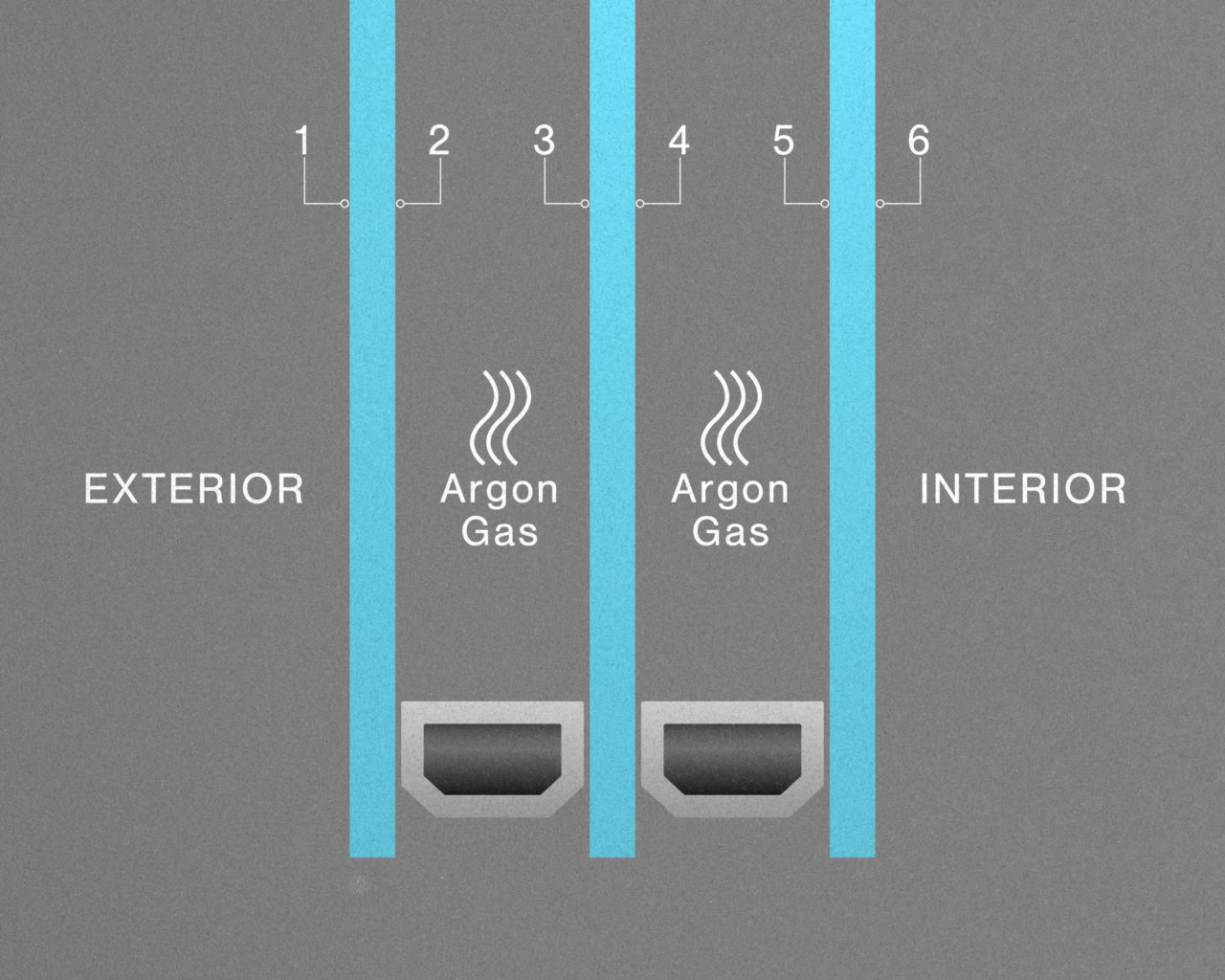
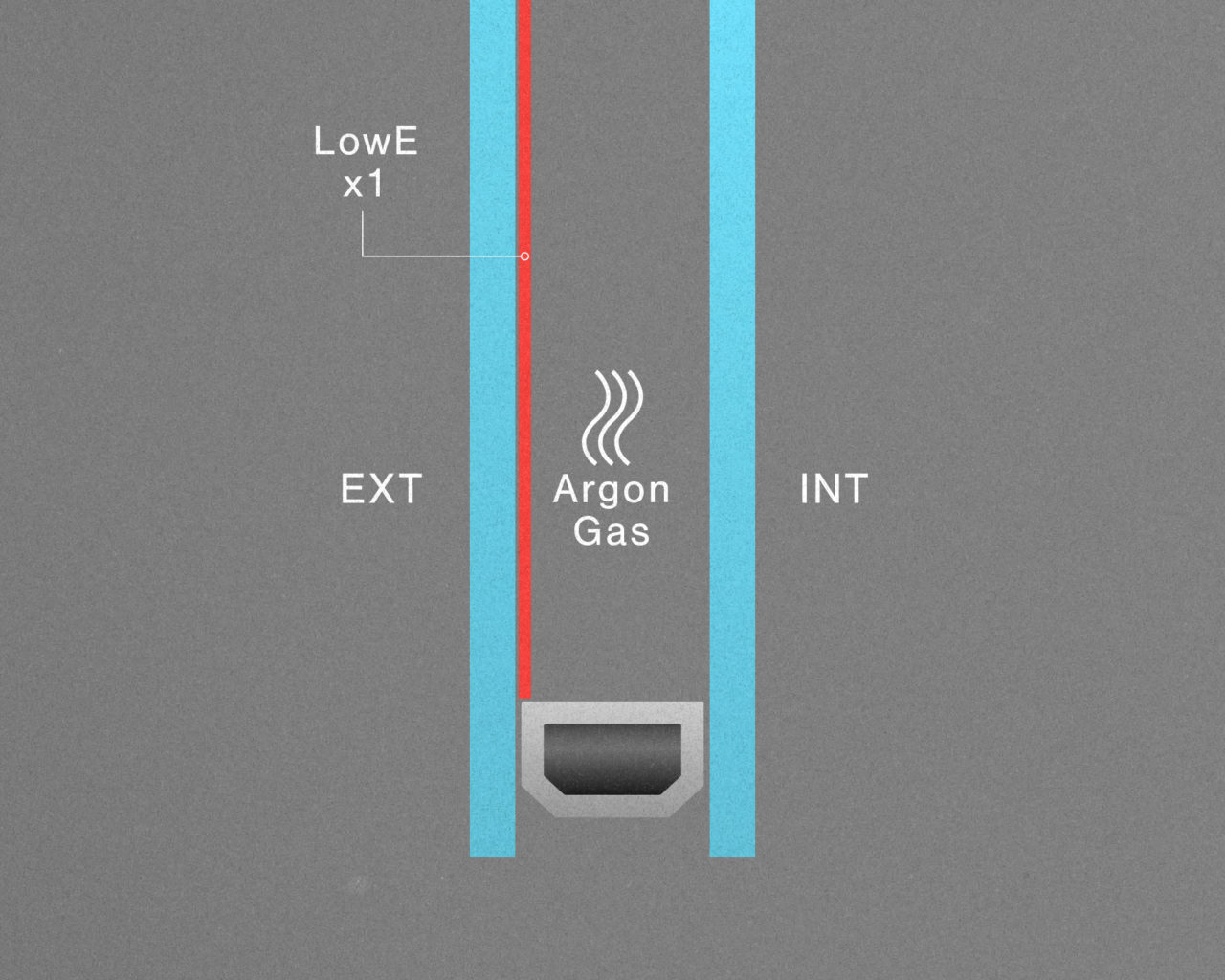
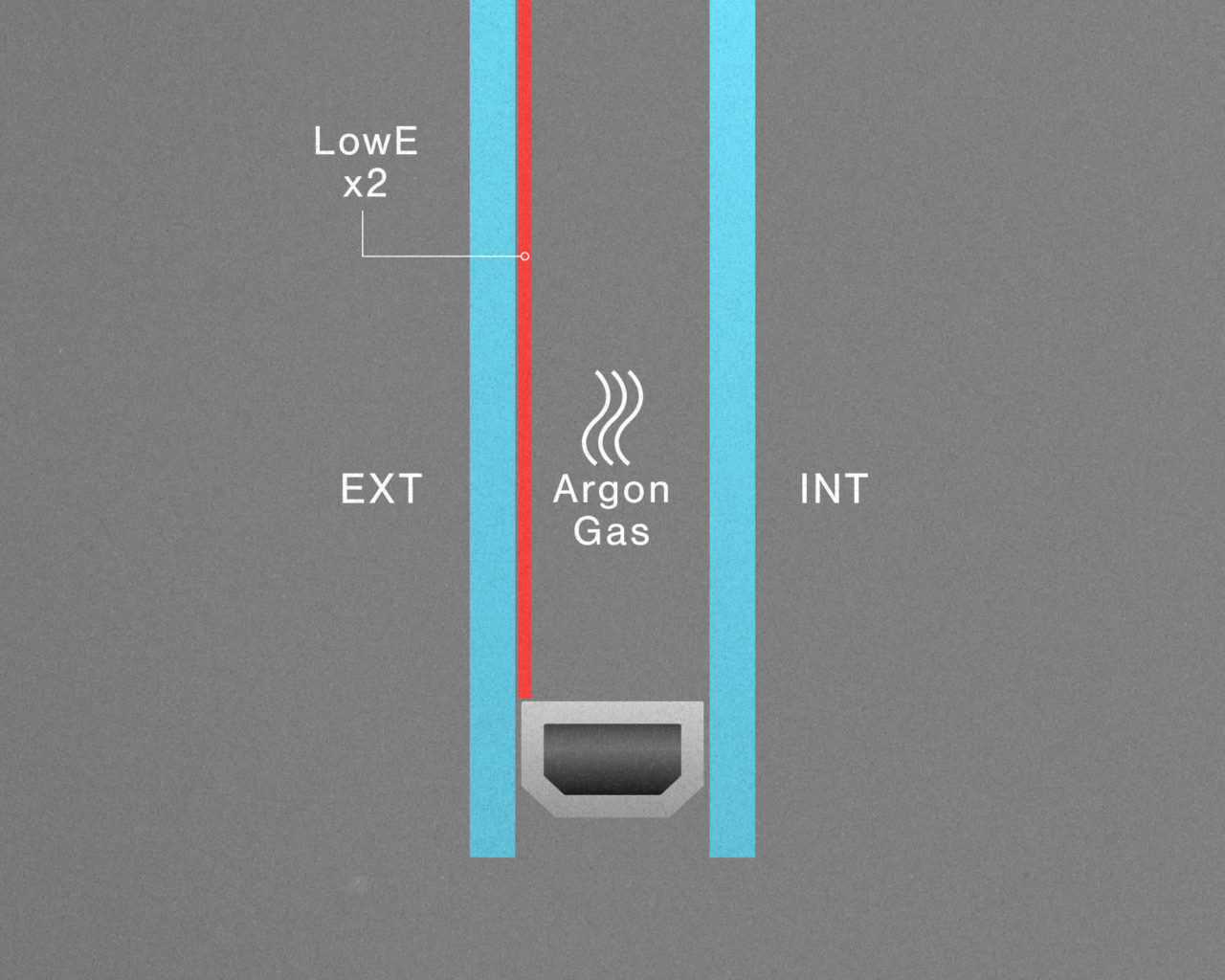
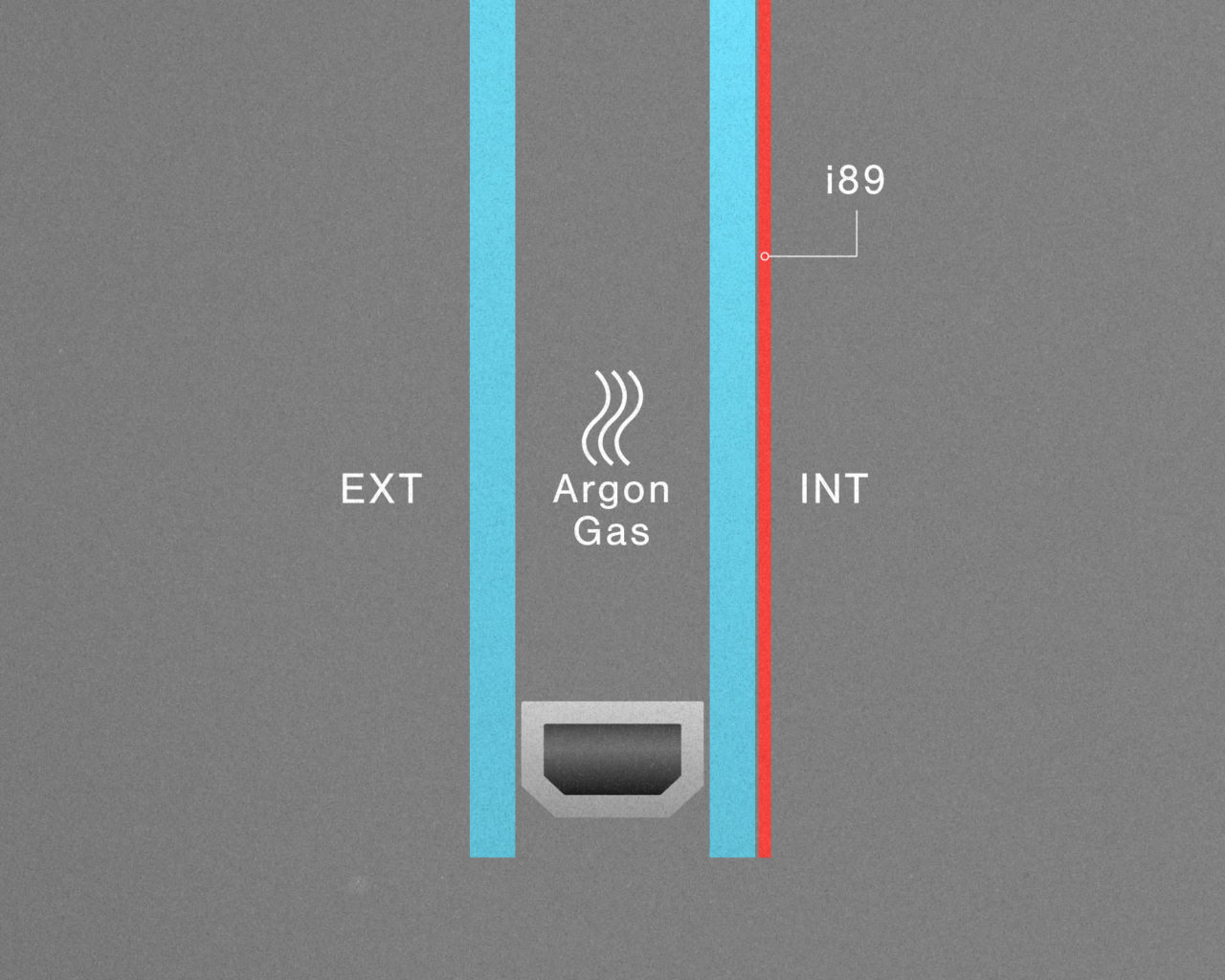
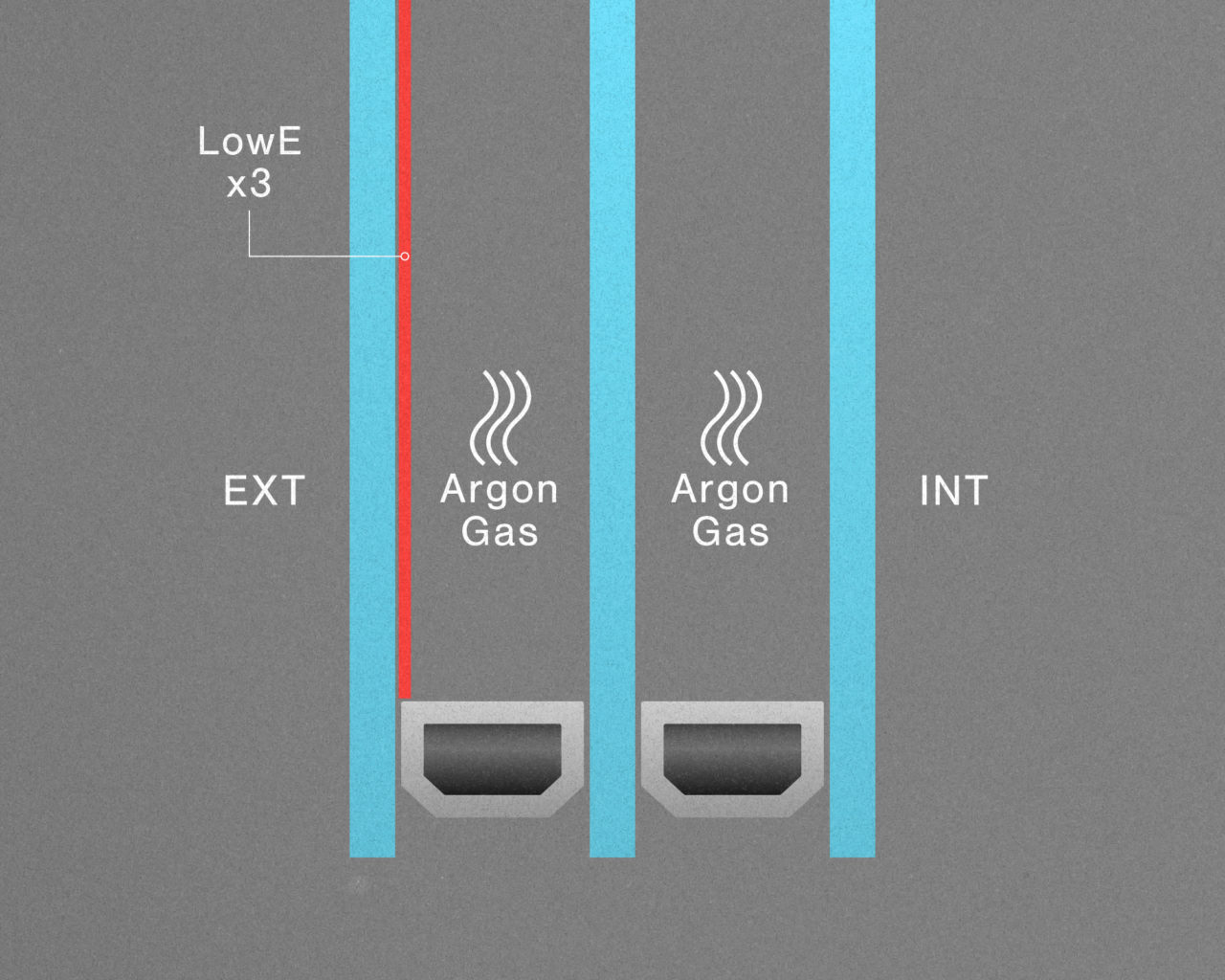
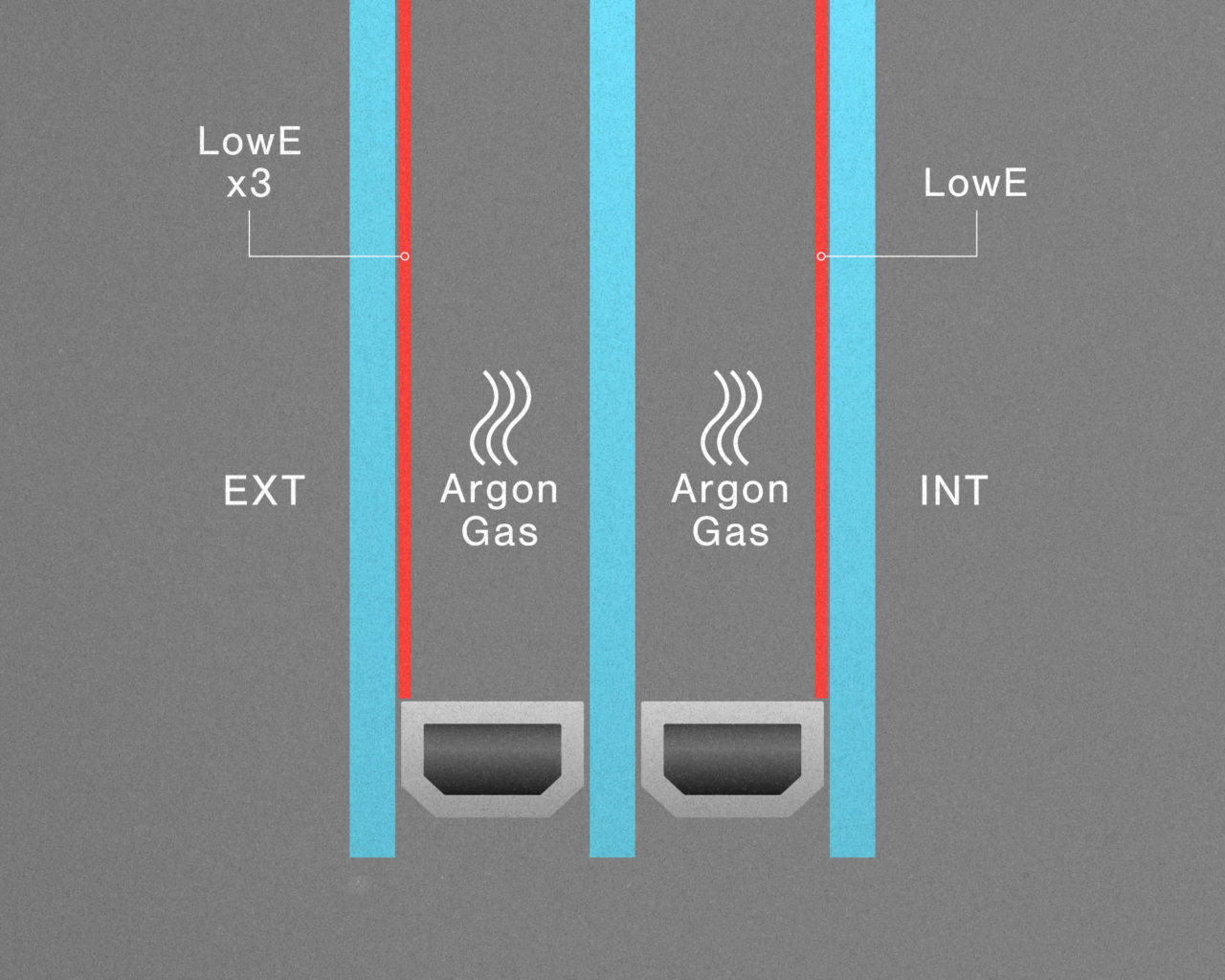
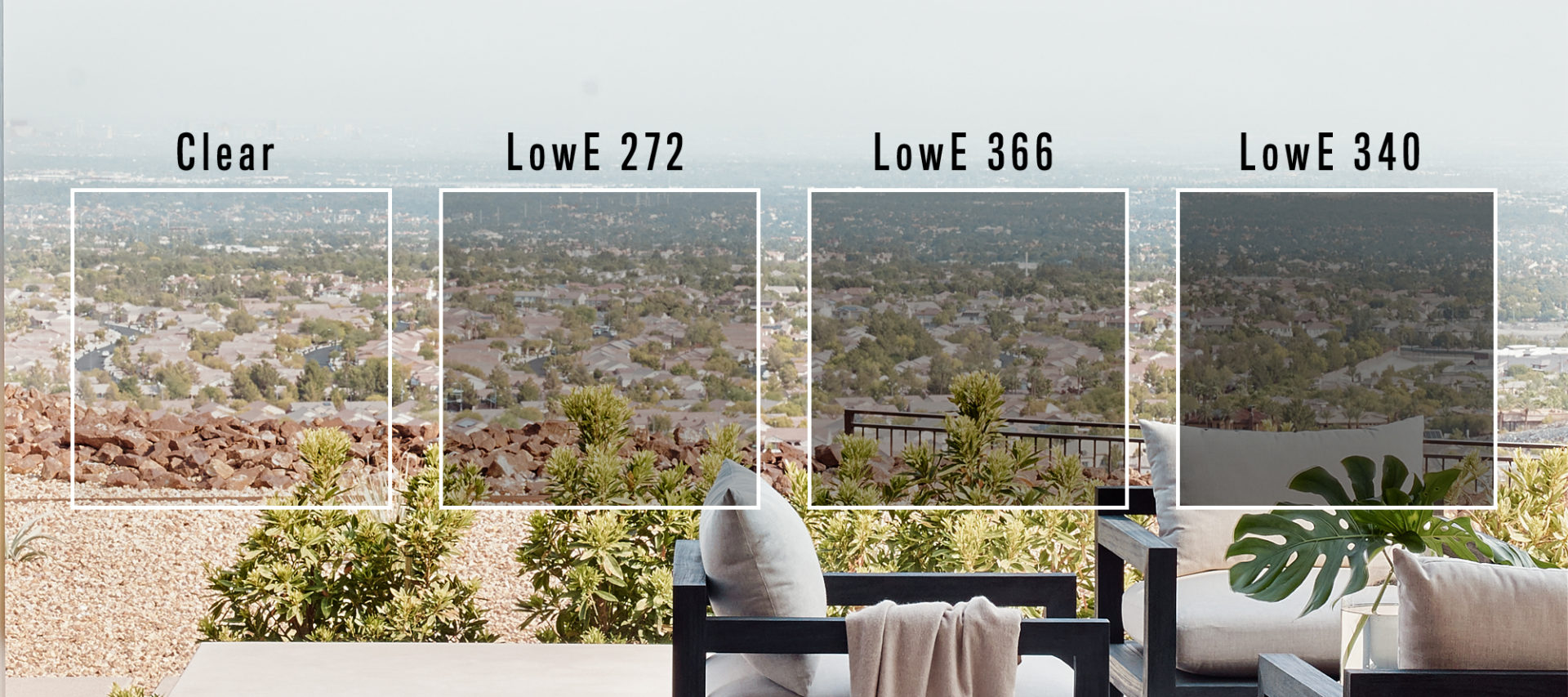
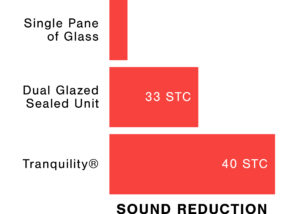
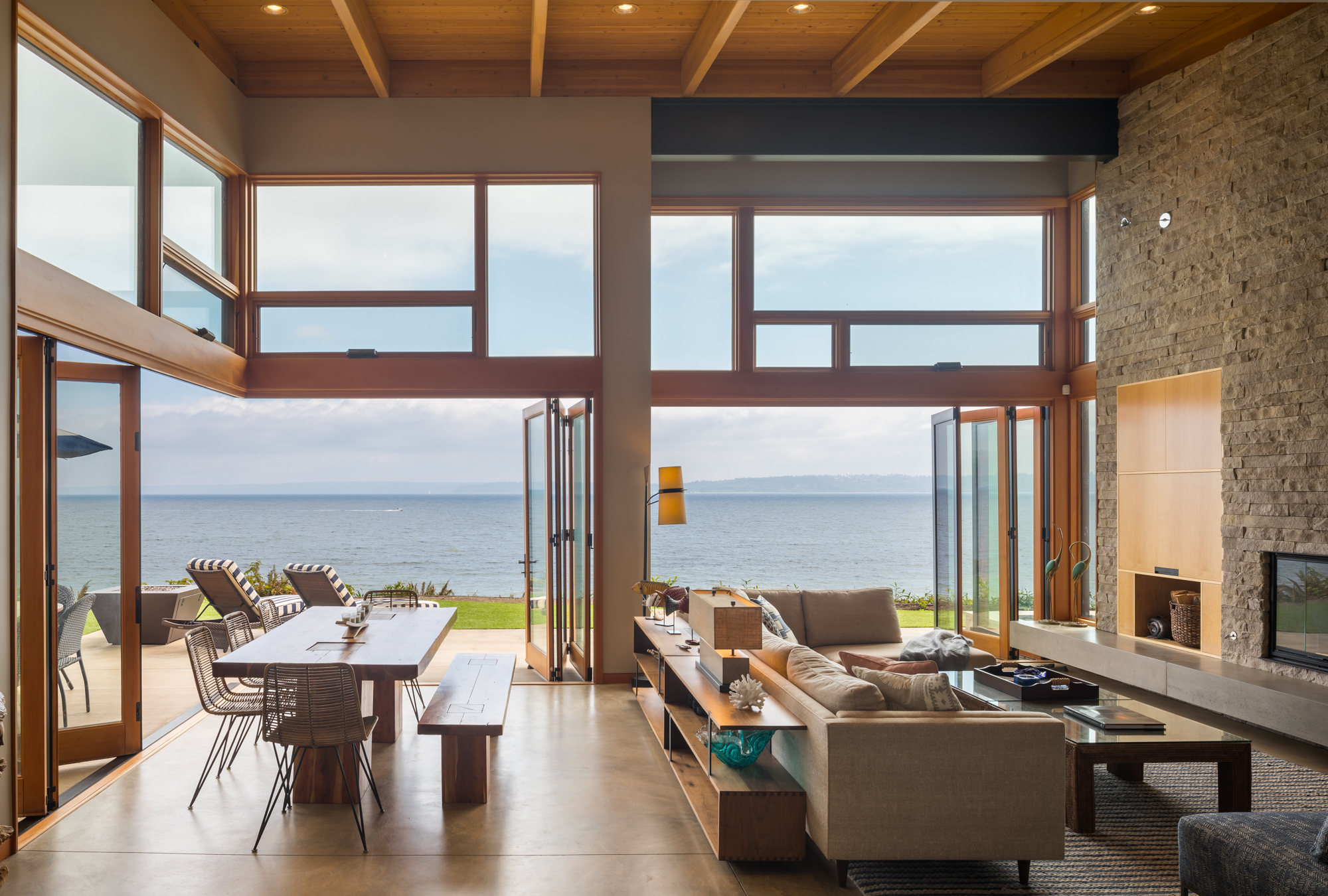
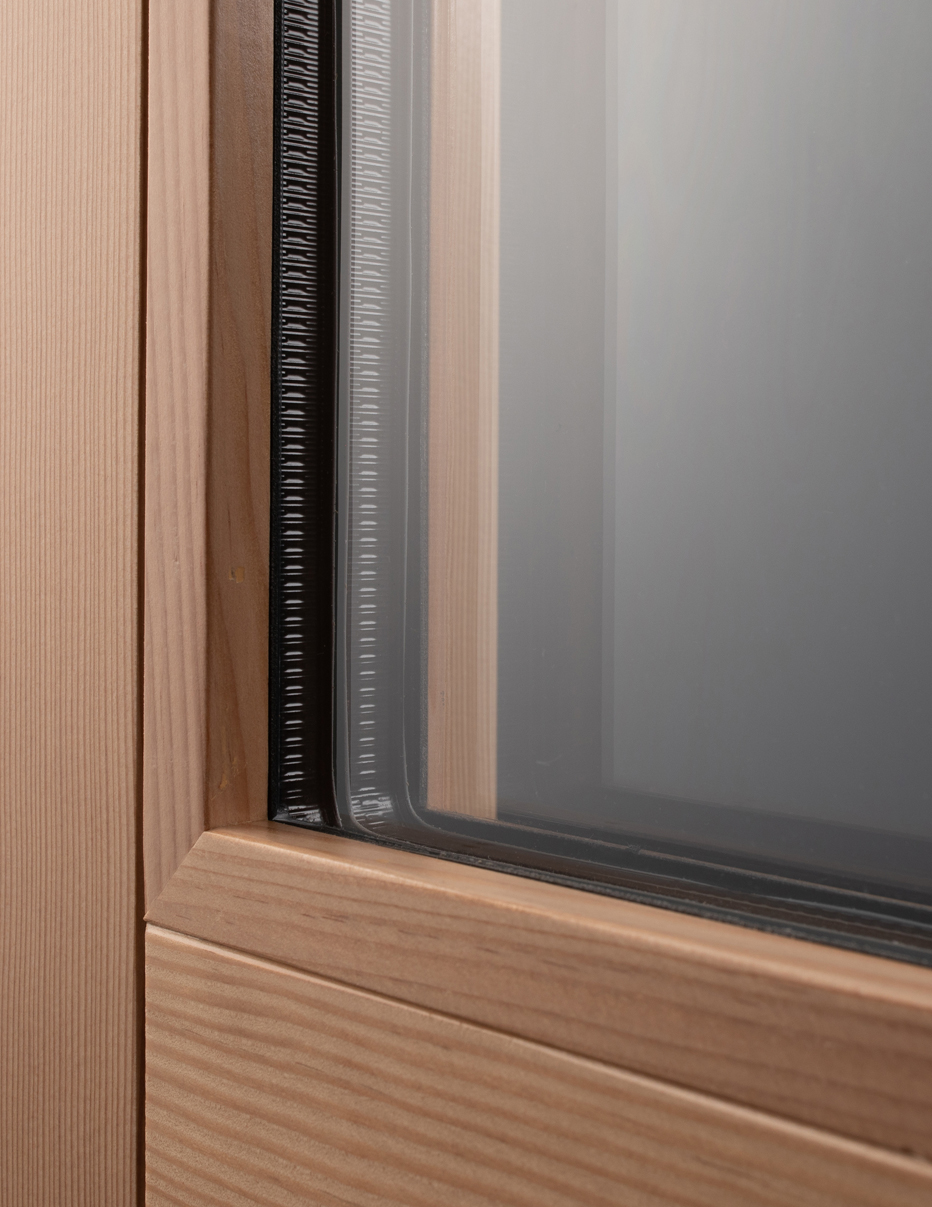
Incredibly thin layers of silver are added to one or more glass surfaces (most commonly surface 2) of our sealed units to reduce the amount of light transmissivity. This high-performance glazing system offers great thermal value in a variety of climate zones, and also protects furnishings by limiting much of the damaging ultraviolet radiation that causes fading and related damage.
Glass performance can be a complicated topic, the most important takeaway is this: you have options. We use the following terms to help communicate the many aspects of glass performance:
U-Value
How well a window keeps heat inside. The lower the number, the better the performance. Glass with a low U-Value is often used in colder climates to keep precious warmth inside the home.
Solar-Heat Gain
How well a window keeps Solar-Heat outside. The lower the number, the better the performance. It’s important to consider solar-heat gain in hot, sunny climates as you’ll probably want to keep that solar heat out. However, in the same hot and sunny climate, you may not be so worried about solar-heat gain for an elevation of your house that’s always in shade. Furthermore, houses in cold climates don’t mind a little solar-heat gain, anything to help keep the cold temperatures at bay.
Light Transmittance
How clear the glass is. The higher the number the clearer the glass. LowE window systems will ultimately reduce how much light is transmitted through a window, especially when your adding several layers of silver. You’ll also see light transmittance change when you move from a dual glazed sealed unit to a triple glazed sealed unit.